
Body Contouring Surgical and Non-Surgical
Body contouring covers a wide span of services, from operations to treatments sold as alternatives to surgery. Much of the marketing rests on a before-and-after photo or a short testimonial, and neither says how typical the result is. This hub explains how we weigh the evidence behind each option and which numbers to ask for first.
Contouring guides and the evidence each one tests
- Skin Removal After Major Weight Loss: what surgery after significant weight loss involves and what to ask a surgeon.
- Liposuction Candidates and Recovery: what should make someone a candidate, and how to read recovery claims.
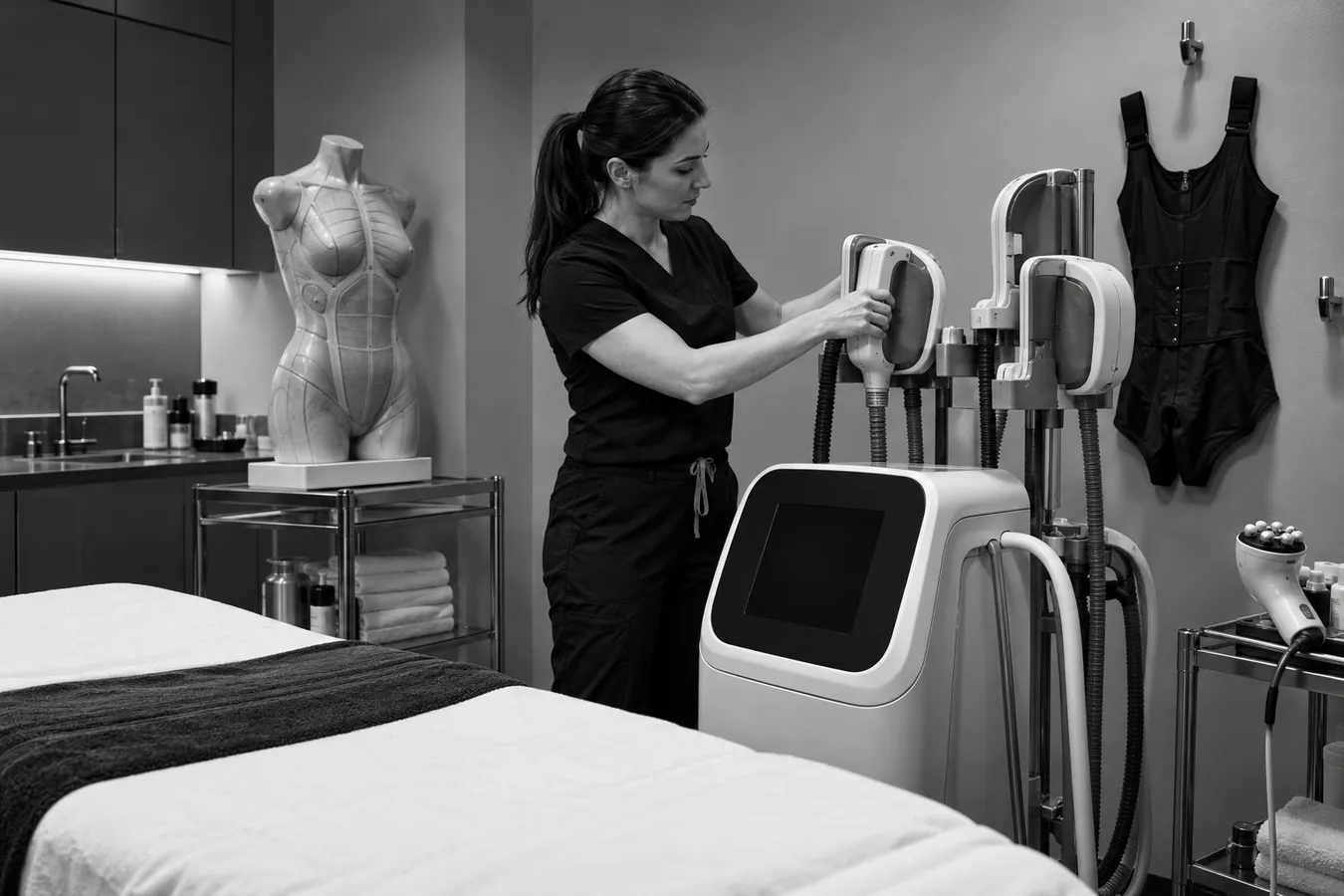
- CoolSculpting Fat Freezing Results: how to read result claims and photos before paying.
- Surgical options: ask for the operation's name, the surgeon's training, and where the work is done.
- Non-surgical options: ask what was measured, over how long, and in how many people.
When a non-surgical option is sold in a med spa, a professional society for dermatologic surgeons has issued a press release on adverse events from procedures performed by non-physicians. Check whether it covers the treatment you were offered, then hold the provider's safety answers up against it.
What the drug studies measured, and what they did not
If your weight loss came with medication, read about the drug before asking about contouring. Three sources cover the drugs, not contouring. A medical society's overview lists top weight loss medications. A review covers GLP-1 receptor agonists for obesity and their outcomes, tolerability, side effects, and risks. A real-world comparison of tirzepatide and semaglutide sets the two drugs side by side. Use them to see what the medication is documented to do, then ask any contouring provider what change they expect afterwards and which study supports it.
Turning a contouring promise into a testable claim
Start with the article on skin removal after major weight loss if that is your situation. Otherwise, write down the exact result you were promised, request the study behind it, and ask how long the result was followed. A claim with no study behind it stays marketing until someone shows otherwise.